back
to the
top
Meet Dyana
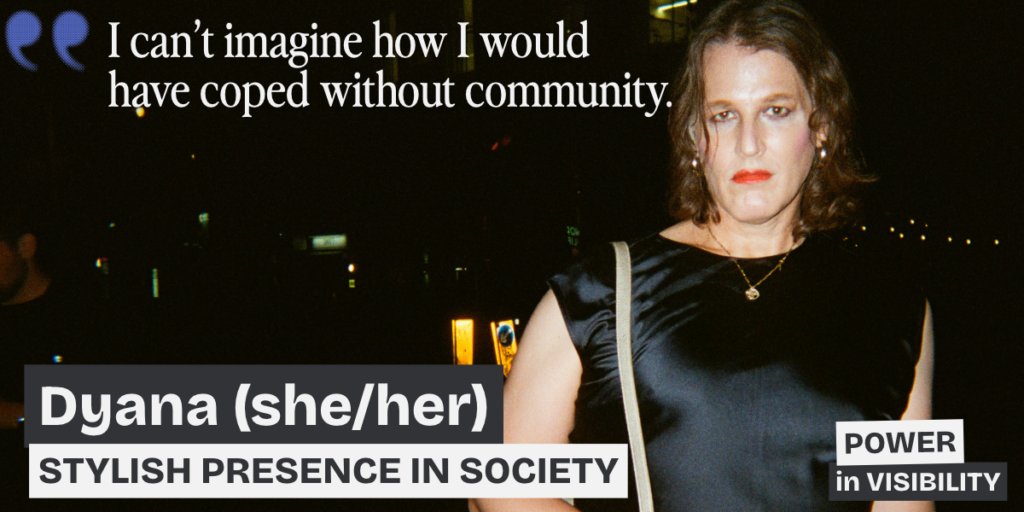
This Trans+ Awareness Week (13–19 November 2026), Not a Phase is sharing the stories of ten trans+ community members. These are people living ordinary lives across the UK. Each was given a disposable camera and asked to document a single, simple prompt: the “power” they’d want the world to recognise in them. The resulting images, alongside short interviews in participants’ own words, are below;
Dyana is a London based trans woman whose style is her power: a joyful, playful way of telling the world exactly who she is.
What’s been making you happy lately, even if it's something small?
So something that made me happy recently is quite a few things. I mean, one of the big ones, I have my first, blond hair, which made me so happy and I had such a good experience with the process, because I was in a very cool hair salon and I had the best hairdresser, so it was like such a magical moment for me because it’s something I’m I was always dreaming about and it turned out quite well.
Otherwise, quite a few things, like just enjoying the journey a lot these days.
How are you feeling about being part of this campaign?
Taking part in this campaign makes me so empowered because I feel like sometimes when you’re on the journey, it can be sometimes a bit lonely at times and it’s so good to connect with everybody, with being part of a campaign like this. Also, I’m very flattered to be selected to represent my community in London.
So three and five people here in the UK reportedly have never met a trans person. So the question is what does this statistic mean to you?
So thinking about the fact that three out of five people in the UK haven’t actually met a trans+ person means to me that it’s quite a high number, but I wouldn’t say it’s extremely high. So I think it’s not as bad as it could be. My point is knowing a trans+ person in person is such a big difference compared to just knowing about trans+people from the media. So I think if this number would go up, it would be just so much easier for us because I think with the history of representation for trans+ people in the media, I think we’re coming from a very bad rap, basically. I think once people have met trans+ people before, I’m quite sure that they have a more realistic view of trans+ people. I just wish we had a better history of reputation because , actually for the whole LGBTQ+ community, there are certain legal things, especially in Hollywood, which have such a big effect on us. I’m talking about the Hays Codes, for example, LGBTQ+ people couldn’t be in a movie as a positive character for like many decades. I mean, it’s obviously not true anymore, but I think historic cinema has such a lasting effect on people. So I just think the media has a very big role in sculpting the image of certain social groups. I’m very sure that those people who know a trans+ person have a much more positive view on us.
If you could say one thing to someone who's never knowingly met a trans person, what would you say to them?
I would just say please understand that even if you are not sure what to think of trans+ people, I can reassure you that a trans+ person is more worried about other people’s opinion, especially early on the journey. I’m just asking you to be either kind to that person or just don’t really react because you don’t know what that person is going through. I’m not trying to make trans+ people victims at all, I’m just saying that I understand it can be, the first time when you see someone obviously trans, can be a bit of an experience, but if you have the awareness that you know is another human being and just treat us like you would treat any other minority and that should be fine.
What does community mean to you and where do you find it?
So community means to me a lot actually, I wouldn’t be here in my journey this far without support of community. Obviously, it’s a very shocking event, when you start realizing that you’re being trans+ and you obviously have doubts at the beginning, like shall I go for it? Shall I be bold enough to actually start my journey and that time, particularly community, was just incredibly helpful, even in the form of reading a book, for example personally, when I read Elliot Pages’ autobiography, it’s an amazing book. I really felt connected with the community. Even if you don’t like part of the community the first time, I recommend to find ways, for example, my first other experience transitioning, obviously I’ve been to gay bars before, but like my first actual coming out to be part of a community was I just joined like some yoga classes and I don’t know, it was really scary at first, but then I just realized you can take your own time and it gets much easier and actually it’s wonderful to be part of.
I mean where I find community is actually almost like its own journey because in the first bits, I was obviously using the internet, social media to find events which I felt brave enough to go to. Then, obviously, I wanted to join more trans specific community groups, which was very helpful because sometimes I felt so alienated from society, so it was such a breath of fresh air to go to meetings. After that, you just get more used to it and nowadays, I find community at my work a lot. So it becomes just a normal part of life to just be around community, because I work in retail and when I see other queer people, sometimes it’s just to look at each other. It can be so reassuring.
When did you first feel like your outward style actually matched who you were on the inside?
The first time I thought my outer style matched my inside is a really interesting process because part of it was going back to childhood where actually I naturally found my style, my queerness, with cosplaying and doing my hair in front of the mirror or putting lipstick on my lips. That was naive, like a very honest, genuine, finding of a style which matches me more. I remember I hated when they started cutting my hair short, which was one of the first moments of clashing with society, because I’m sure my parents just wanted me to fit in as a boy more so that was the first feeling that how I look, it’s relevant to how I feel.
Obviously fast forwarding many years and decades, I had some experiments in my teenage years but there was an attached shame to it. So, because I transitioned later in life, I feel like I was struggling to look at the mirror and appreciate what I saw because for so many years, I was trying to fit in with the male gender to look cool. To be honest, looking back, I even remember that I was always jealous when I passed the female section of a clothes store and thought it’s so much more interesting. When I really felt the first time it matched, I would say one of those photoshoots when I asked the photographer if I could wear female clothing for a shoot. I think that was the first time I saw the pictures, it was like, oh my God, this is actual and I have so much potential. I thought maybe I can actually look how I want to be seen. I had these projections, like, I had daydreams when I was teenager. More recently when I decided to transition, I remember I was seeing myself with the hoodie and long nails, like it was a flashback from the future, because at that time I couldn’t even imagine I’m gonna have like, long nails. So, I had these kinds of pretty images which became reality. When I looked down on myself, I had a picture of me in Tesco’s with sandals, short shorts and like, bare legs and just shooting that image. And I remember like, oh my God, I can’t believe it’s like people see me how I want to be seen.
What does getting dressed mean to you now compared to what it did before?
So getting dressed to me now, compared to how it meant before, is so different. I mean, I have to admit that I’m still having bad days sometimes. So it’s not like I’m constantly happy and happy with how I look in the mirror, but the main difference between the two is that before it felt so much more like I have to dress up to fit into something. Today, I dress up to look good, to feel, oh, I look good in the mirror. I didn’t really have that feeling before. It was like before, even though I was always interested in style and fashion, it was more like trying to fit into a group of people. I would say trying to be cool and these days it’s so much closer to self-expression and to my mood as a woman. So before it was more like covering up something, and now it’s expressing myself and the only thing I need to care about, asking if I can cycle in these shorts. It’s more practical now, but I’m just happy and I love to go shopping.
How has creativity, so style, fashion, self-expression helped you to build your authentic self?
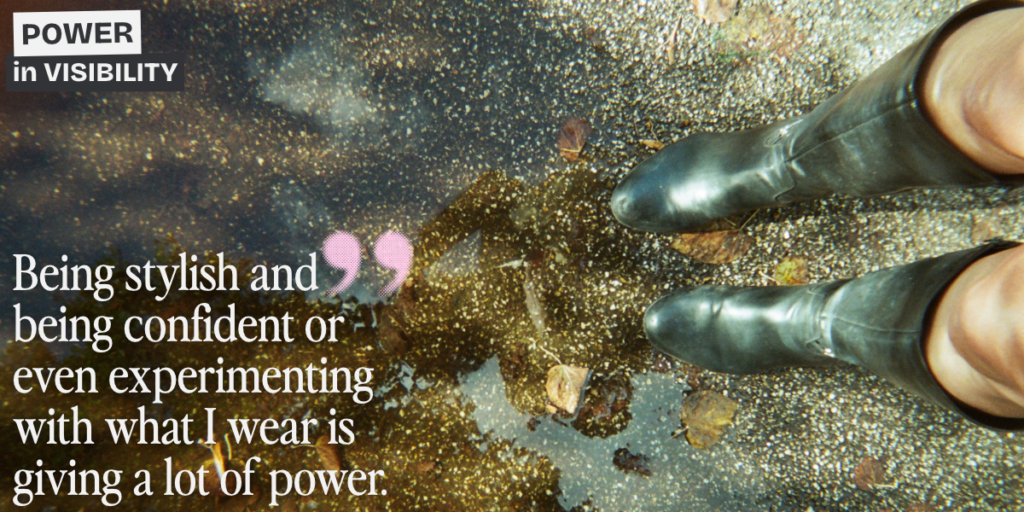
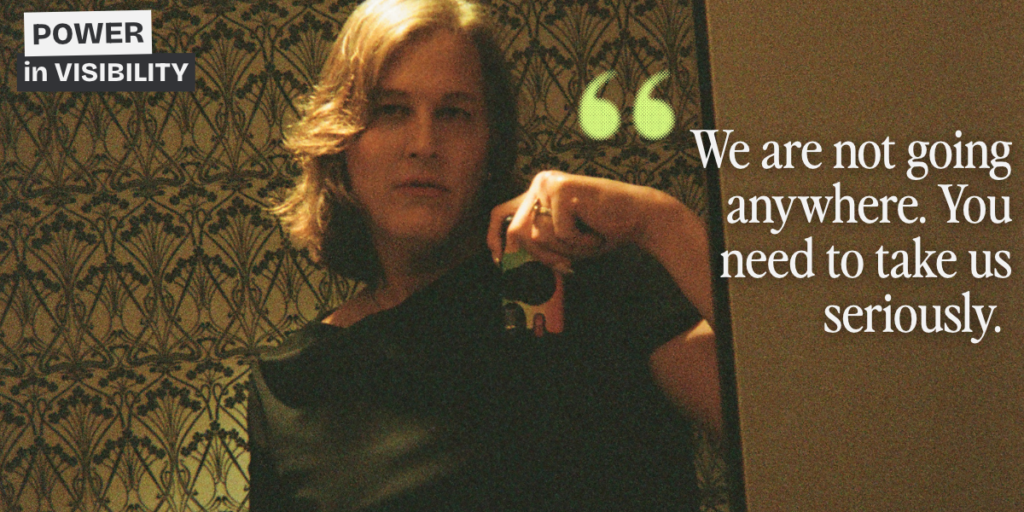
So being a creative person who was always preoccupied with styles and looks and creativity, I think it helped me a lot to kind of manifest myself as Dyana. I think it helped loads because I learned a lot about my journey, that before transitioning, I was so preoccupied with style and looks because it almost feels like it was a rehearsal to what was my escapism to what I want to be in reality, but I couldn’t. It had to stay in the closet in a way, it had to stay being my art. So I was behind the camera, I was filming and photographing people, especially women. So, I built up an aesthetic of what I like, but then what I actually realized is that it’s all about me. Being an artist is creating self portraits in a way. It just helped me so much more because I didn’t have to start coming out as trans, I didn’t have to start from scratch, I already had a sense of style, of how I want to present myself. It’s very complicated because sometimes I even feel oh my God, it feels so weird that I’m so happy for a new hair dye. I think at the same time, I try not to be so hard on myself because this is something my soul was craving all my life. I like enjoying it, enjoying the ride. Another thing I would mention is style, being stylish and being confident or even experimenting with what I wear is giving a lot of power. Obviously, especially in the beginning as a trans+ woman and with my height, I was having a hard time sometimes with society but I think I noticed that looks have a lot of power. It’s not like I’m trying to please people with my looks, it’s more expressing something. You can call me whatever, you can call me a man or think of me as a weirdo, but you can’t deny my looks. It’s really just for me. I’m getting something out of that. Everybody has their own journey, I’m not saying this in any judgmental way, but it really helped me that being visible as a trans woman also means that we are not going anywhere. You need to take us seriously. It’s Not A Phase, it’s actually not. We are human beings and we have the right to be there like anybody else. I think being visible is really important because that’s how I know from my youth, because I grew up in quite a great time in an Eastern European city and I wish I saw more queer people. It would help me so much more to find myself. I hope with the way I’m dressing and being in the world, I hope I can also help other people who might struggle inside.
What do you hope people see when they look at you?
I hope people more and more just see me as a woman. It depends on different days, like sometimes, I’m hoping that they see me as a creative and interesting person, like a female artist, and sometimes I feel guilty about it, but sometimes I just want to be seen as a hot girl, you know? I think it depends on my journey as well. I think that’s quite important. Most people who never had a chat with a trans woman and interestingly, even people who know that I’m trans, people don’t want to engage that much as I would like to engage with them, because I love to talk about these things. There is a fear in society which I’m sure a lot of people just don’t want to say something that might hurt my feelings. I hope they see me as a woman. I wish people would know more about these journeys, that it takes a while until somebody finds their own style and transitions. It’s not like you take a pill and you become a woman, so it’s quite a long time and that’s why I hope people see me with curiosity rather than judgment.
If the younger version of you could see what you've become, what do you think she would notice first?
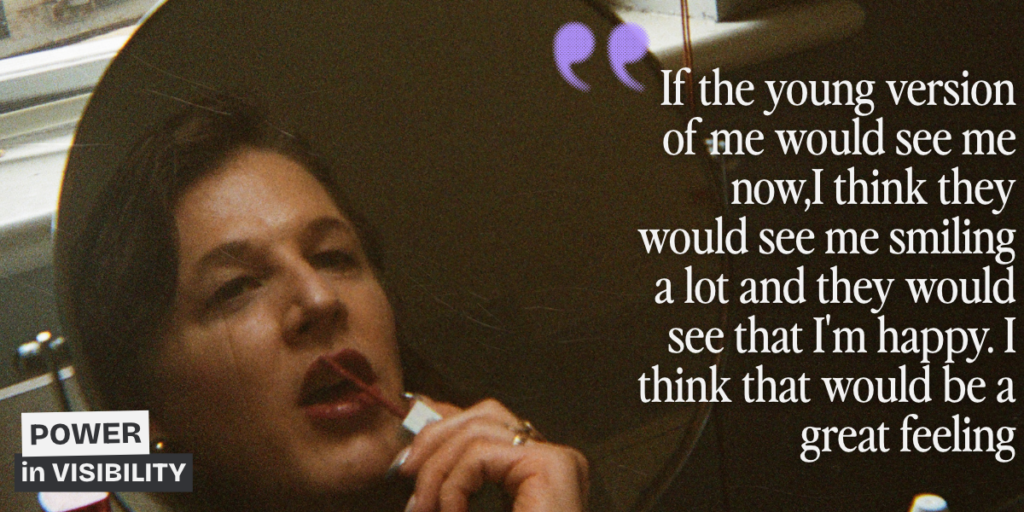
If the young version of me would see me now,I think they would see me smiling a lot and they would see that I’m happy. I think that would be a great feeling.
What does Power mean to you here? Is it just about being seen feeling confident? Is it a both? Is it something else?
It means joy, because I enjoy dressing up and finding a new piece of clothing and/or shoes which I enjoy. So it means the power of joy, which is just feeling good about being me. The other powerful thing about style and manifestation is that it’s a communication with the rest of the world. To be able to communicate my gender and my lifestyle, sometimes I find feminine clothing has so much playfulness and so much opportunity to express and communicate feelings and vibes, which I truly enjoy. I find it also powerful that I feel like I have more opportunities to express myself as a woman, like with jewelry, with makeup, with so many options for dressing in different seasons. I find it powerful because I think as an artist, I know that creating and, and creating an image is power and, it’s not just power, but it’s also healthy and it makes the world more and makes me feel more at home in the world with the way I am able to express myself. So it’s going against alienation, which I think is a major problem in today’s society. We wish the haters would rather not judge someone like me, but maybe get inspired and find their own way of self-expression, that would be much better for everybody.