back
to the
top
meet iris
This Trans+ Awareness Week (13–19 November 2026), Not a Phase is sharing the stories of ten trans+ community members. These are people living ordinary lives across the UK. Each was given a disposable camera and asked to document a single, simple prompt: the “power” they’d want the world to recognise in them. The resulting images, alongside short interviews in participants’ own words, are below;
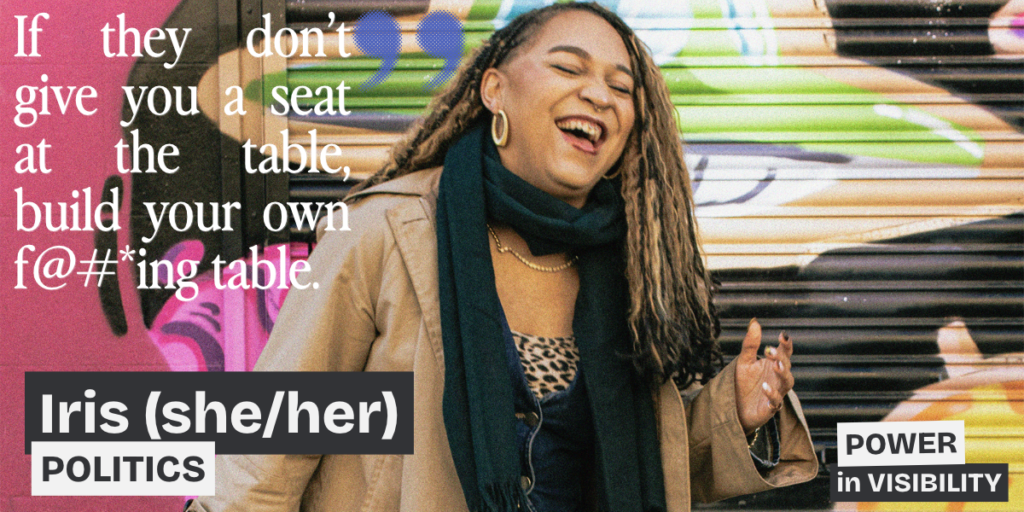
Iris is a Member of the Scottish Parliament for the Green Party, whose drive comes from growing up working class, and whose power comes from helping people and getting results that enact change for good.
Tell me something that's been making you happy lately?
I have recently moved to a new flat. In doing so, I’ve found a lot of things that I put in storage, many books. I love to read. It’s like rediscovering an old version of myself that I can kind of get along with. Many books I’ve not read in many years that had such a massive impact on my life that I’m looking forward to diving back into.
Favourite book?
I’m a little bit of a nerd. I like to read long essays. There was one called ‘The Problem With White Feminism’, which I really enjoyed. ‘Why I’m No Longer Speaking About Race’, which I also really enjoyed. I don’t necessarily have to agree with what’s in the content of the book, but I enjoy exploring other people’s perspectives, especially when it comes to political thoughts.
How are you feeling about being part of this campaign?
Good, it’s nice. I mean, I’m still getting used to being a member of Parliament. It’s certainly overwhelming at times, but it’s always nice. I have people like this reach out to me all the time trying to get the message out there. It’s certainly different I will say.
Is it exciting? Is it uncomfortable? Is it scary? How do you feel?
I think it’s all of them. I’m not the kind of person that likes to speak about myself a lot. I know that sounds weird. I’m a politician. Like, that’s the whole job. I’m getting better at it. I’m more policy focused. I like to do the nitty gritty. Line by line, pulling things apart. So finding myself in a situation where so many people want to hear from me, on a personal level and what I’m doing is certainly new, but I think I’m getting used to it.
So three in five people in the UK do not personally know a trans person. What does that statistic mean to you in regards to your life?
It’s not surprising that three in five people in the UK don’t know a trans person. There are very few trans people across the United Kingdom. According to the 2022/2023 census, in Scotland, there’s less than 20,000 trans people out of the 5 million of us. It’s not particularly a negative thing, it’s not a badge of honor or pride to know a trans person in your life, but it does speak to the kind of movement we’ve seen in regards to how people perceive us. Because a lot of people don’t know trans people or don’t have a frame of reference, they’re often falling for misinformation and narratives that are putting us in a negative light. Of course, not all trans people are great and not all trans people are bad, just like any other kind of people. But for me, I think it’s been quite interesting because of my position and how hyper visible I am and how it is literally my job to go and speak to people all the time and knock on people’s doors. I may be the first transgender individual that people are knowingly interacting with. I’ve found that it has come with some really interesting interactions, never anything negative, but some people are curious and you would be curious, wouldn’t you? Especially when you hear all this stuff on the news. So I think it’s been quite eye opening for some people, but eye opening for myself as well.
What does community mean to you and where do you find it?
So I recently wrote a piece for the National about for Black History Month, about what community essentially is and how often we’ve been reduced into little boxes based on immutable characteristics, where community is sometimes being forced, instead of just looking around us. Community to me is knowing that you can rely on the people around you, whether that’s around you in the most immediate locational sense, or your friends or your networks, and to support you through the good times and the bad. I think, yeah, it’s very important that we reinforce community at this time, amongst everyone because we’ve unfortunately seen some negative turns against minority groups in Scotland and across the UK and people feeling so very isolated. Now, that might be because of the internet. It might be because of how social media has changed things. I’m a big fan of making sure that we can connect with people on a 1 to 1 level, and often in person, to go into book clubs or being in fantastic spaces such as this, to support the community.
Where do you find it? What does Iris do when she wants to have a little bit of community time?
I probably shouldn’t say this, but I find I enjoy being at the pub. I think the pubs are such
a quintessential part of everyday Scottish and British life. I think as much as we see them as just somewhere to go and get drunk, I think they often unite communities. People from very different backgrounds who might not ordinarily interact will find themselves down at the local, maybe after a long day at work or after a long weekend. They could have some really strong community based work in there. I know there’s a place near me called Camerons, and everyone in there either knows each other or they’re willing to get to know you. They do potlucks and stuff like that. You know, it’s more than just somewhere to drink. So I find community at the pub, which is very nice, but I also find community in my work. What was really nice about being elected, and of course, I’m honored to be a member of Parliament, but my focus is improving the everyday lives of people. People will email me with some really complex cases or some really upsetting things, but getting them the results has helped many people build community. I’ve been working with a lot of community groups to bring them together, which I’m hoping that across the five years or more I get in Parliament that I’ll be able to do that efficiently.
If you could say one thing to someone who's never knowingly met a trans person, what would you say?
We’re not scary, we’re not out to get you. I have no interest in trans-ing your kids or breaking down society. We’re just all trying to live our lives as they are. I think people are right to have concerns, when you read that children are identifying animals and then medical malpractice, it’s very easy to react. But looking into it more and speaking with trans people and seeing our everyday life will open your eyes to who we really are. There was a lot of attention paid to the fact that I’m transgender when I was elected, and I spoke to some journalists and I was just like, you know, it’s actually not the most interesting thing about me. It’s something that I’m not ashamed of. I’m also not particularly proud of it. It’s just who I am. I will always be like this, until I die and that’s okay. That’s life.
What does the typical week for you between Holyrood and working in and around Glasgow look like?
So I’m in Holyrood Tuesday, Wednesday & Thursday which I tend to commute to. I don’t often stay over. I have transport committees on Wednesday morning, so sometimes I might stay over then. So that’s between being in the chamber, being in my parliamentary office, meeting with my staff, doing stakeholder meetings and of course, scrutinizing the government. Mondays and Fridays. I’m in my office in my region, which is in the East End, that I share with Patrick Harvie MSP. That’s usually for me to do my surgeries and to catch up on work, do some admin and plan stuff as well as do some community engagement. On Saturdays or Sundays I tend to do community engagement around the region or do some campaigning and stuff like that so it’s pretty busy. We’re in recess at the moment, which is when Parliament no longer sits, but we’re still working. It can get quite intense really quickly, so it’s really good to manage your time and quite effectively. I’ve just had my staff team start with me, so they’re helping me manage my time. My friends know I’m the kind of person that wants to be doing everything at all times, so it’s been really hard to have to say “actually, I’m not able to come to that event, I’m doing X, Y, or Z”. I’m getting better, but yes, my typical week tends to be quite busy, but it’s enjoyable because the stuff that I’m doing I think is quite important.
So what does it mean to you to walk into the Scottish Parliament?
It means a lot. I said this before, I wasn’t the kind of person that ever imagined myself
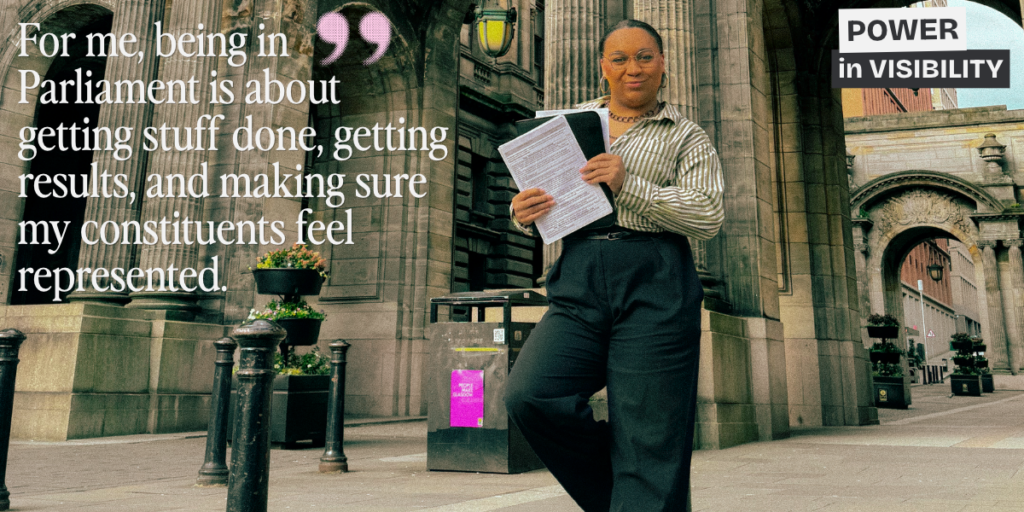
getting into frontline politics. I’m definitely a policy person. I like to do the briefings. I like to advise. So finding myself being the actual person doing it is certainly something new for me. But I think it’s important because I recognize I’m part of a parliament of minorities. There’s no single party that’s able to command a majority of the chamber, which means that I can definitely, alongside my fellow MSPs, have an influence in the government and force them to do more positive things. And they’ve got some good plans over the next five years, and they’ve got some not great plans, and they’ve got some plans that could be fleshed out more. I’m the Shadow Minister for Housing and Tertiary Education as well. So I’m particularly focused on those areas, which are two massive, massive areas that have problems going on. I’m a young person, I’m a renter, so being the Shadow Minister for housing is very important with that lived experience. But I also previously worked in the higher education sector. So coming into this role to make sure we’re delivering for our students is also fantastic. For me, being in Parliament is about getting stuff done, getting results, and making sure my constituents feel represented. We’re at a really difficult point in politics at the moment, people feel so far away from what politics is doing and how quickly it’s doing it. I think this is the opportunity to change that.
What about little Iris in the village in Yorkshire? How do you think she would feel? How do you feel on an emotional level? You're achieving so much so young and you're at the crossroads of so many different intersections of minorities and majorities and people and places.
Oh, she would have been terrified. She would have been like, “you’re doing what”. I mean, I’m the youngest parliamentarian in the United Kingdom at the moment. My children will never get a break, I’ll be like, “when I was your age you’ll never know what I was doing” I’m very much rolling with the punches, and this is a responsibility that I volunteered myself to do. I understand it can be incredibly emotionally challenging. It’s a bit weird that people know who you are and you’ve never met them, and having to deal with that. Or my friends were like, “my mum loved your outfit today”, and you’re looking around [confused]. But of course I’m on camera all the time. But this is my job. I’ve chosen to do it and I think it’s important that it gets done. There are some emotional drawbacks to that, and it will certainly affect my personal life, but I’ve chosen to make that choice. Those are sacrifices that I’m willing to make to make this country better. I’m not the victim in this. Politics destroys the lives of so many people when you think about it and the speed of it can really hold people back when we’re not supporting people, especially those in working class communities, to reach their full potential. So I’m willing to go through all of that fear, anxiety and upset to build a better country for the people around me.
You should be very proud. Do you feel proud?
I think so. I don’t know if I’ve quite internalized what happened. I think I got elected, I went into shock, and then I was just like, okay, this is my job now. I don’t think I’ve had a chance yet to sit down and be like, ‘oh, what is going on?’ So I think maybe I’ll look back in a few years and be like, I can’t believe that I did that. But I mean, getting elected at 23 was always going to be really overwhelming. I think maybe when I’m in my 40s, maybe whoever is my therapist at the time will be like, wow. So let’s unpack that.
People can talk about being trans and being a person of color as separate conversations, and then they meet you and you're both in one person. What's it like in the rooms you work in, in everyday life? Do you find people are trying to pick apart those things or put different sorts of stereotypes on you, sometimes weird things or anything?
Sometimes. I find that quite strange because to me, of course I’ve faced racism and transphobia, but people that have met me know I’m a trooper and if I’ve got a goal, I’m gonna achieve it. But these are just facts of my life. I don’t find that it makes me different from anyone at any point, and I don’t know if that’s positive or negative. So it’s a bit weird being in the scenarios where you can tell that someone is putting those expectations onto you and expecting you to behave in a certain way or be a certain kind of person. It’s just how I’m born, right? There was no character selector, and if there was, I certainly should have selected being born wealthier. Being in those rooms and actually being like, I have the same respect as you because I am just as equally elected. That my perspective matters because I’m speaking on behalf of my constituents. I’m not speaking on behalf of trans people, I’m not speaking on behalf of black people or mixed race people. I’m speaking on behalf of Glasgow and the people who are electing me. I’m doing the same job and I’m still taking in the same information that the other MSPs are and coming to different conclusions. We have different ideological standpoints, but I’m still evaluating that stuff. I do think that when I was elected, there was somewhat of an expectation that I would just be a mouthpiece for my protected characteristics, that’s the term, and I’ve never understood that. My experience is my experience. There is no hive mind of trans people or black people, or at least if there is, nobody invited me. That means that I’m gonna go through life and existence as I am. I don’t know what it’s like to not be trans. I don’t know what it’s like to not be mixed race. I don’t think that should impact the kind of person I am or what is expected of me and hopefully in the years down the line, we will come to that kind of realization. This is a realization I thought I already had when I was a child, then obviously was very rudely woken up by the world that people do judge you for your protected characteristics. I’m willing to prove people wrong.
Society doesn't always make space for people with your identities to hold power. Where does your sense of power come from and when do you feel it most? What makes you feel powerful?
Well, I think that harkens back to the community question. I think community makes me feel powerful. My sense of power comes from helping people. It’s been like that my entire life. Now I can help people on a massive scale. I’ve got 500 000 constituents, it’s a big way to help people.
But even as a kid my primary motive was helping people. How do I make people feel included? How do we make sure everyone’s happy and enjoying their experience? How do we have a seamless experience? So I feel most powerful when I get casework wins. I had quite a significant casework win this week. I can’t divulge details of course, but I helped a vulnerable individual who is in a very vulnerable circumstance within a system that hadn’t really thought of the circumstance that this individual would end up in in higher education. I’ve worked in education so it just took me writing a letter saying, ‘actually, could we do this, this, this and this instead’. They said ‘Yeah. Actually, these are really good suggestions. Thank you so much. We’ll do this’. This individual has got this support now and that support may change that individual’s life. So that’s where my power comes from, knowing that I’ve had that impact. I think from my experience you have a lot of people that are there to do politics and play politics, it’s a bit of a game. But there are people from most of the parties in the chamber who I think that this is also their driving characteristic. I think if we can find ourselves in a situation where we can encourage more people in politics to come forward who are primarily focused on making people’s lives better and not furthering their own ideological objectives, we’ll have a healthier political system. That’s not to say I’m perfect, I’m certainly not perfect and I’m not saying that politicians should take after me, but I think that’s such an important quality for politicians to have.
So you are in the public eye more than most people. How do you decide what's yours to share and what's yours to keep?
t’s been a bit weird. I don’t watch any coverage of myself. I don’t watch myself on TV. I won’t listen to myself back on the radio. When I was elected, I wasn’t on the internet for like a month because it was very intense and people were telling me not to go on the internet. It was quite funny at times because I’d be in the pub and people would come up to me and be like, ‘Oh my God, I’m so sorry about what’s happening to you?’ And I’ll be like, ‘what’s happening to me?’. It’s weird being in the public eye a lot. I don’t mind it as much as I thought I would, but I’ll be somewhere and someone will come up to you and be like, ‘oh my God, can I have a selfie?’ And you’re like, ‘yes, why?’ because I’m just me. I’ve not changed since I’ve been elected. I still received more public attention than the regular person because I was active in politics and I was an activist against gender based violence so I was still doing TV stuff like that. On choosing what is public and what is private. I need to get better at that. I haven’t quite come up with a formula. I choose to share when it is relevant. There are certainly moments where I’ve chosen to withhold stuff. But then also I’m very willing, as someone in politics, to actually say, ‘well, this is my personal experience’ and I understand obviously not everyone has had the same experience, but we’re very willing to say, ‘well, that’s how I came to that conclusion.’ This isn’t ideological, I’ve not read a book and come to that conclusion. I’ve lived through it and thought this is what would have helped in that scenario, and it might not have helped in every scenario. I’m sure over the next five years, there’ll be many things that I’ll choose to share or things that I wish weren’t shared that probably will be shared about my personal life and that’s okay. That’s life unfortunately, and for someone from a small village, people tend to know a lot about each other anyway. So I guess it’s just that on a larger scale.
Could you tell me a time when you, being visible, made a real change for someone?
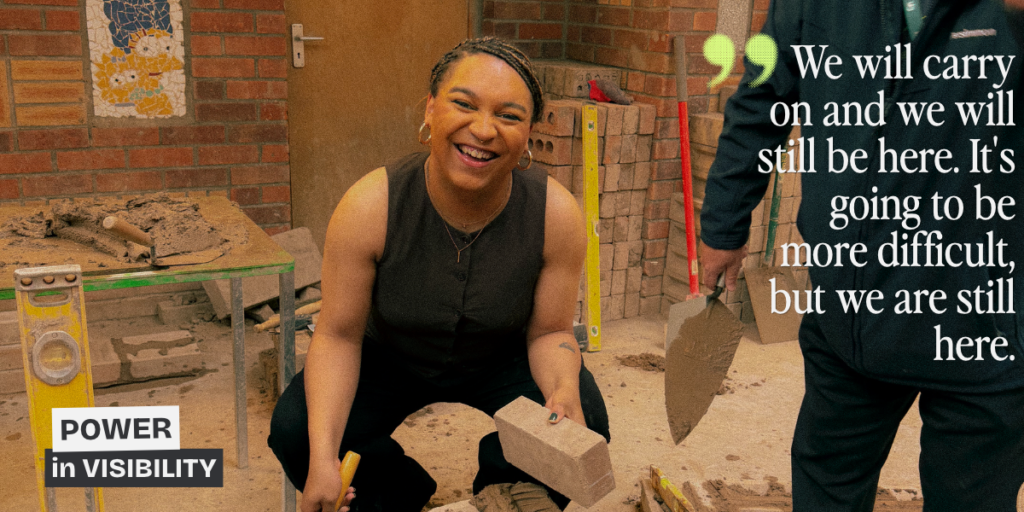
A lot of people have told me they cried when I was elected. I know that’s very small, but that has made a change I think for a lot of people. I’m just me. I’ve not changed, I’m still the same person. But I think they were happy because now there’s someone in the room and it’s no longer arguing about us or without us, you actually have to say it to me, and that’s okay, I can debate that’s my job. But there’s been a lot of misinformation that is consistently spread all the time, either maliciously or accidentally. It might genuinely be accidental and it’s just important to have someone that says, ‘actually, I don’t think that’s correct’ and just challenging those assumptions. But I’m sure there are very many little stories that have actually changed people. I think what’s most impactful for me is for the young people knowing that it gets better and knowing that you’re not alone and isolated and that it’s scary right now and of course it’s terrifying, but it’s not the end of the world. We will carry on and we will still be here. It’s going to be more difficult, but we are still here.
Who or what made you feel possible for someone like you to be in this space?
I would probably say my mum. She’s a black woman and she says, ‘you’ve got to be your biggest cheerleader because nobody else will be. You’ve got to challenge people because nobody else will. If you want something done, you’ve got to do it because nobody will do it for you’. My mum was 18 years old when she had me and she’d only been 18 for two months and we were in insecure housing, and eventually got a council house. She gave me the hussler spirit I guess. I watched as she went from being 18 and vulnerable to raising two kids, putting herself through college, putting herself through university, starting a business, business not going so well and then eventually getting herself a stable job. By my age, my mum had two children, and she was fighting the world, working three jobs and still looking after two kids. I just think this world is, you know, it’s shit, right? There’s a lot that’s unfair about it, but it doesn’t have to be that way. I made an ode to that in my maiden speech in Parliament. I recognize that I have a significantly different upbringing than the people in this room. I’m not privately educated, I don’t come from these structures. I would say my family is quite political, but not in the organised political sense. Nobody’s really been a party member or been an activist. So feeling empowered to actually say, ‘actually you know, we can change this. We don’t have to just sit down and take it. Things can be different’. I am transgender, but like I said, that’s not the most interesting thing about me. I think the fire that burns inside of me for change is actually from my class, my experience being working class and growing up working class,and the fact that I’m transgender just happens to be there on the side. I’m going to continue fighting and I’m sure the people around me will continue fighting until we can build that better, not only accepting but, more empowering, world around us. I think it’s going to be an interesting five years to be sure. I’m enjoying it so far. I’m still definitely finding my feet and working out how I can achieve what I want and do. Do I want to be the kind of person you see bellowing in the chamber, or do I want to be the one that’s doing the policy work? I think there is this fire that’s within a lot of people up and down the country that want change. I think too often people think that these rooms aren’t meant for them or they’re not built for them. Let’s be clear, they’re not built for them but it doesn’t mean that we’re not going to be in them. If they don’t give you a seat at the table, build your own fucking table. That’s my approach to it.
How powerful do you feel powerful? How do you make yourself feel powerful if you don't?
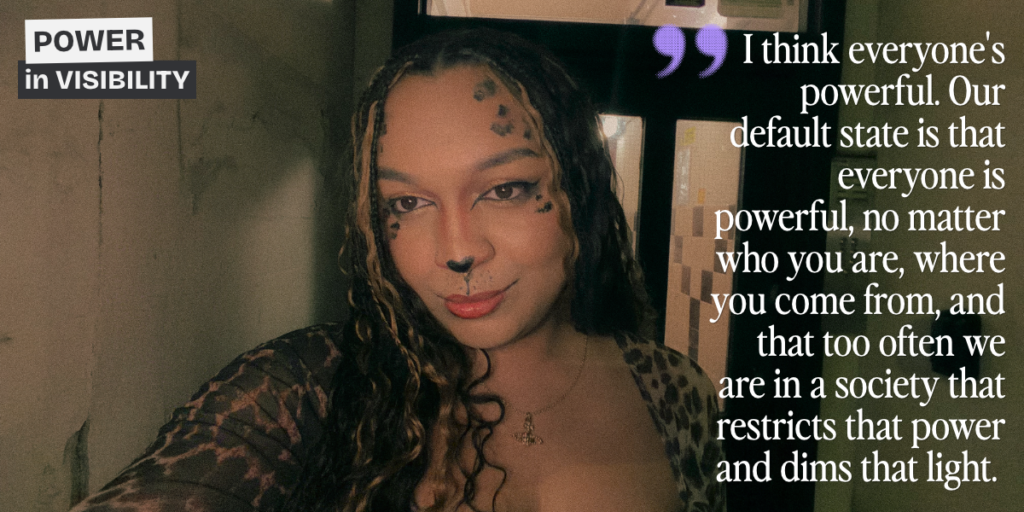
I think everyone’s powerful. Our default state is that everyone is powerful, no matter who you are, where you come from, and that too often we are in a society that restricts that power and dims that light. I think you make yourself powerful by reminding yourself that you are this is your world as well. The people that might be judging you or upsetting you or putting you in a position that you don’t like, are doing it because they want to feel powerful. You don’t need to put anyone else down to feel powerful. Your power comes from you being who you are. My power comes from helping people. If we can get more people to find power like that, then everyone will be as powerful as we’re meant to be, and hopefully we will in time.