back
to the
top
meet jack
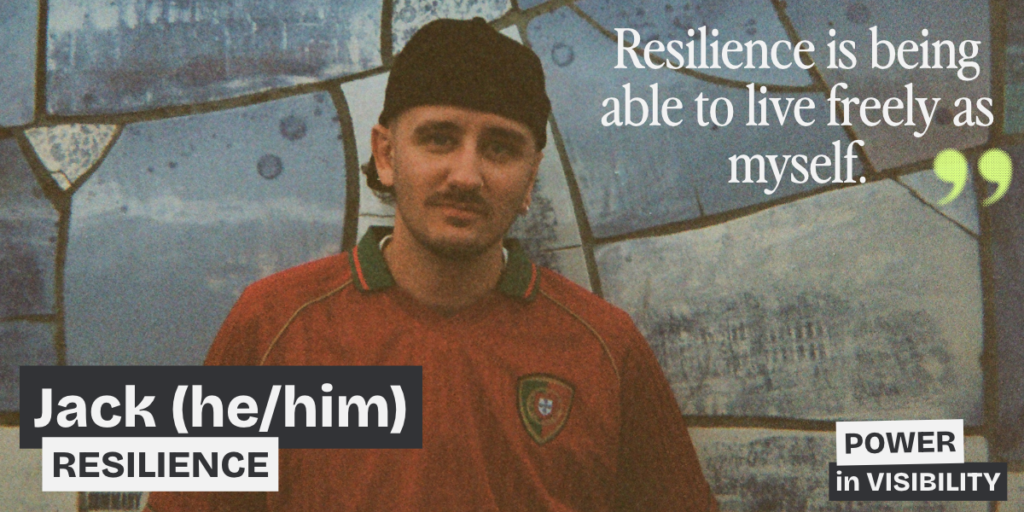
This Trans+ Awareness Week (13–19 November 2026), Not a Phase is sharing the stories of ten trans+ community members. These are people living ordinary lives across the UK. Each was given a disposable camera and asked to document a single, simple prompt: the “power” they’d want the world to recognise in them. The resulting images, alongside short interviews in participants’ own words, are below;
Jack who lives in Belfast believes resilience means living freely and visibly as a trans person and not caring what anyone else thinks.
What's something that's been making you happy lately? Even something small.
Something that’s been making me feel happy lately has definitely been being able to get out and travel and meet new people. I feel like I’ve had lots of different experiences recently. I’ve been spending quite a lot of time with my friends and partners and visiting different parts of the world, which has been really enjoyable.
I just got back from New York, I was there for the first time, which was just really fun. I just really enjoyed it, the sense of the community there and just the whole entire vibe of the city was so cool. Then me and my partner, we went to Italy last September, and it was just really nice just to get away and just take a break from just life in general, I suppose. It’s been really busy recently, so I just feel like even though that’s something small as such, it just has brought me a lot of peace. I feel like I need it and with the job that I do as well, it’s good just to take time.
How are you feeling about being part of this campaign?
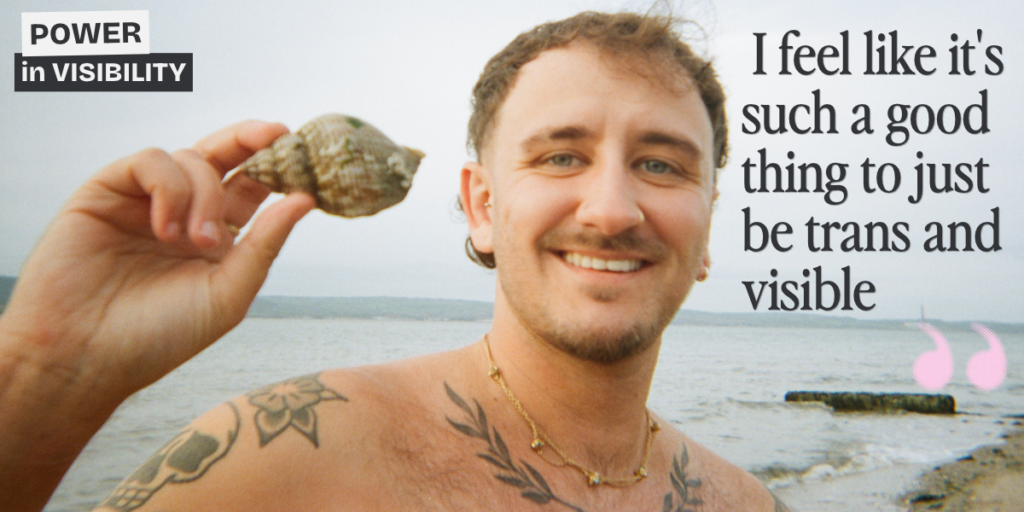
I feel very excited about being part of this campaign, because I feel like it’s such a good thing to just be trans and visible, which is something that I have always struggled with. But I think that comes from my experience of coming out as trans+ when people maybe didn’t really know what trans+ was, or what trans+ people look like. So I kind of feel like it’s good just to show people like this is what trans+people look like, and this is who we are as people, and we’re not scary, you know, and we’re just normal human beings who are living our day to day lives with families and friends. I just feel excited to represent that side of trans+ people.
3 in 5 people in the UK don't personally know a trans person. What does that mean to you in your own life?
Knowing that three out of five people in the UK don’t know a trans person, I suppose what that means to me, it just shows you, how it can be so easily stirred in social media about how we were perceived as people and human beings. You know, we see a lot of headlines in the news and articles just talking about how trans+ people can be mentally ill and how we maybe shouldn’t have the same rights as other people. It just shows me how people can form these opinions based on online articles, when they don’t actually know someone who’s trans+, or maybe people are fighting certain legalities around what toilets trans+ people should use and or hospital awards that they should use. It’s kind of like people are fighting the cause that they don’t really know what they’re talking about and can make massive misconceptions about trans+ people. That shows what that means to me as a trans+ person and it can be quite scary that people don’t know that. I feel like it’s hard knowing that statistic and also, highlighting to people that we’re not just statistics, we’re not these headlines and we’re just normal people trying to live our lives in peace and happiness, and that’s really all it is.
What does community mean to you and where do you find it?
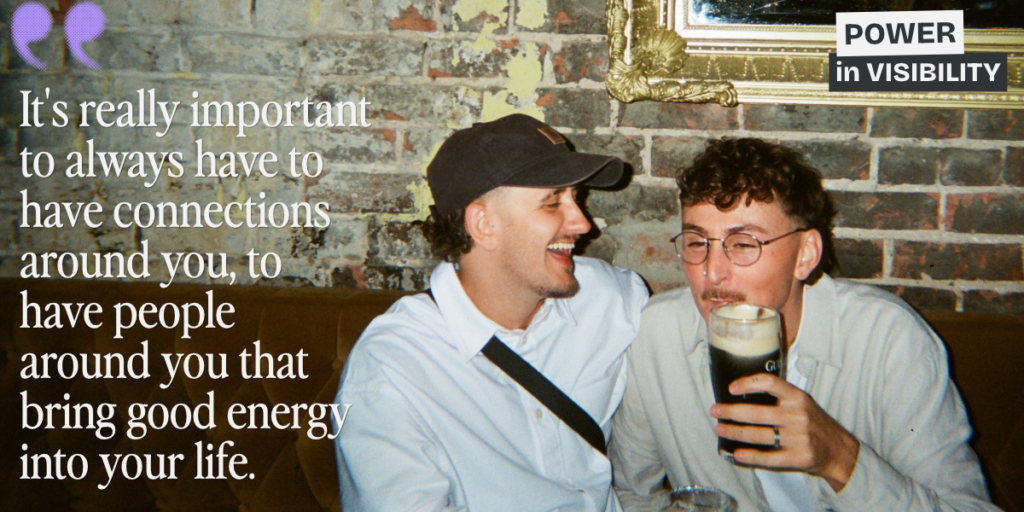
Community means to me really a sense of belonging and visibility. I feel like it’s really important to be part of a community, and it can feel very empowering to be part of a community as well. Especially a community that you feel understands you. It doesn’t have to be a queer space or anything like that. It can just be a space where you feel like people understand you, or they are trying to understand you. That’s what community means to me. And I just think it’s really important to always have to have connections around you, to have people around you that bring good energy into your life.
If you could say one thing to someone who's never knowingly met a trans person, what would it be?
If I met someone who had never known a trans+ person, really what I would say to them is to just be kind and to allow that person to just have space for that person, just to allow yourself to open up your mind and understand that person. Even if you feel like you’re completely off the ball with them, if they start talking about something, I think it’s okay to ask questions if you don’t understand something. Obviously, sometimes people can ask very personal questions and that you might get shut down in certain conversations, but I feel like it’s important to have those conversations with people, because it’s important that people understand you and who you are and other people. We don’t always have the same experience. You know, my experience isn’t going to be the same as somebody else, who’s also transitioning and they may have boundaries that mine may be slightly blurred on, you know, and no one’s the same, but I think just saying to someone like, we’re probably more similar than what you think. I enjoy going on my holidays. I enjoy eating food, I enjoy sushi, like, I enjoy all these different things. And I’m probably more like you than what you actually think.
What does resilience mean to you and how has it shaped your journey as a trans person?
Resilience means to me, I suppose it’s like a strength to me. Resilience is this sort of empowerment in my own visibility and sort of how I can bounce back from situations that have caused me hardship, throughout my life. It’s a difficult one because I feel like there’s so many aspects of resilience, you know, when it isn’t always your strengths. There’s other aspects of it where you’re maybe just showing up every day and, you know, things aren’t easy, but you’re able to get through that day and that’s really what it means to me and how it’s kind of shaped my experience as a trans person is allowing myself this grace to continue. Even if I know that things aren’t easy and things have been really difficult, I’m probably going to get to the other end of it. You know, I’ve had certain experiences where, for example, I had my top surgery done probably like nine years ago now and looking back at it, once I had that done, I remember afterwards, I had so much anxiety about just going out because I’d been in the house for over a month. I was just so worried, and I don’t even know what I was worried about, you know? But I was like, I’m scared that people are going to bang into me or they’re going to look at me a certain way or I don’t know or if I had my top off, I was concerned about how they were going to see my chest and what they would think about that, because could they see my scars, could they not? I feel like now looking back, why did I ever feel that way? It shows me that if I was to ever feel down again, or to feel like if I was to go through another surgery again, that, I know I’m going to get through it, you know?
Can you tell us about a time when you faced a challenge that helped you discover a strength in yourself that you didn't know you had?
A time where I feel like I learned about a strength that I never really had would probably be when I did come out as trans, when I was like 14. At the time, it was like 2010, and I didn’t know anybody else who was trans. I knew maybe like 1 or 2 people in Belfast at the time, and I know Belfast is quite small and the queer scene is also quite tiny in Belfast, I know that, but it was just so isolating at the time. My family didn’t really accept me at the time and that was really painful and difficult because I was trying to find myself. I was trying to find my own identity, but I was being criticized by all these other people who didn’t understand what I was going through. I think it was probably, an aspect of there wasn’t awareness around trans people back then and whereas now there’s obviously more visibility and loads of people talk on Instagram and stuff about it. Whereas I didn’t have anybody to talk to at the time, but I feel like that experience has now shaped me again. If I experience any sort of hardship or if I feel like people are judging me for who I am, I just don’t care what people think about me because I know everything that I’ve gone through in my life. People maybe see the hard exterior and maybe see me and think, I don’t understand that, but I just don’t care because I’ve gone through so much that I’m not worried about what you’re thinking about me, you know? I think that just adds in again to that resilience that I feel for myself. The strength that I had in myself back then to keep going, even though at times I didn’t really want to and I take from that when I go for a thing now, I’m like, I didn’t want to go through life back then, but I got through it and I have made some amazing friends. I made some amazing memories. I don’t think I would maybe even have the friends or experiences that I have now if I didn’t do that.
How has your relationship with yourself and your identity changed over time, and what has helped you keep moving forward?
My relationship with my identity and how that’s changed over time and how I keep moving forward would definitely be my identity has sort of changed over the last while. I definitely feel like there was a period of time where I was very insecure about myself. Fast forwarding to now, I would say that I’m 100% comfortable and secure in myself and I feel like a part of that probably has to do with the fact that I’ve medically transitioned. Being on hormones for the last like 11 years of my life, having top surgery for the last like nine years of my life, that’s definitely been something that’s shaped that and allowed me to feel more comfortable in my identity. I think everybody’s journey is different. I think ultimately, yes, these things help being able to get gender affirming care, whether that’s hormones or whether that’s surgery but at the same time, it’s not all about that, and it’s about how you feel about yourself and how confident you are in yourself. I know it can be a scary place at the minute, living in this world with so many transphobic people and so many different agendas. It’s just really about being comfortable in yourself and just being your own apologetic self and not caring what other people think about you.
What people, places or communities have helped you feel supported during difficult times? And what has that support meant to you?
Communities that I’ve felt support from and I suppose what it’s meant to me over the years and where I feel seen in those communities were probably… I don’t know. I feel like I’ve been in a lot of different communities, like I have so many different friends that come from so many different cultural backgrounds and different ethnicities. The queer scene is obviously a massive one in making me feel comfortable and where I fit sometimes in society, but really, that’s a hard one. I feel like communities are a difficult one because I feel like I’ve found a sense of community in every aspect of my life, whether that’s, you know, cis people, straight people, gay people, lesbian, trans. I have felt support from all of those communities and I feel like quite privileged to say that because there’s always been people who have tried to tear me down, but there’s always other people on the other side of it who have been so kind and amazing, who maybe don’t recognize or understand what I’ve gone through, but still accept me as who I am.
Resilience is often associated with pushing through difficult experiences, but can also mean resting, asking for help, or choosing yourself. What does resilience look like for you in everyday life?
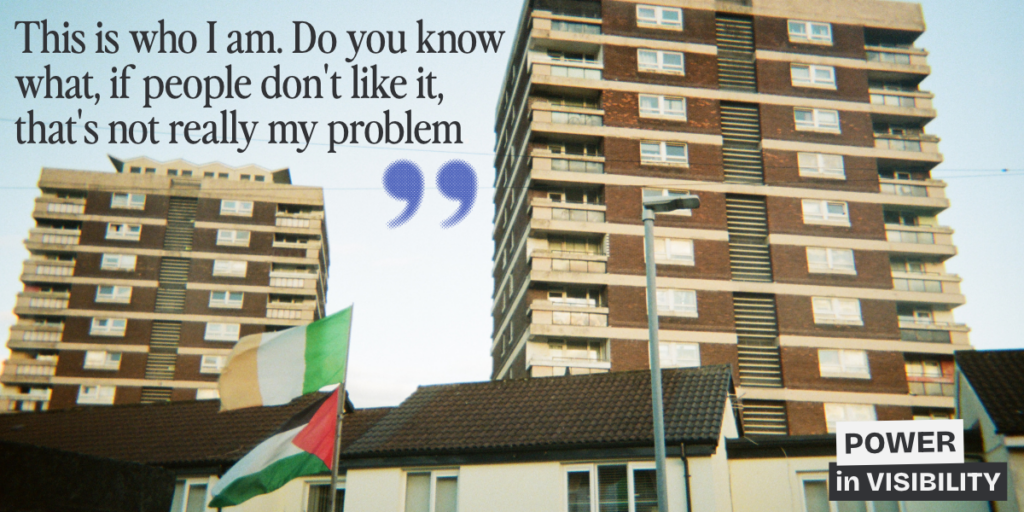
Resilience and what it looks like in everyday life, for me personally, and I know it can be associated with resting and caring, for myself I do feel like Resilience for me is doing things that I’ve kind of spoke about, you know, it’s it’s being able to go out and live freely as myself, allowing myself to be visible, even though sometimes I really don’t want to and sometimes it can be a really scary experience turning around to someone and tell them that you’re trans+ for the first time when you’ve maybe created a friendship with them and they don’t know. I’ve had hard situations at work where I haven’t told a lot of people, to be fair, but maybe say 1 or 2 people in work who have not known and I’ve shared my experience with them and it’s like you’re kind of worried about what way people are going to react to you., I suppose in that sense and resilience, I feel like I’ve been able to just kind of be this is just me and this is who I am. Do you know what, if people don’t like it, that’s not really my problem. I feel like for a long time I couldn’t say that. I was really probably ashamed of myself and who I was and that was really difficult. Sometimes, I still feel like that, like it doesn’t just go away. I think you’re always going to feel like that if you’ve had some sort of discrimination in your life, you know.
In everyday life I feel my resilience is just me continuing to power on when things aren’t easy. I’ve dealt with some really difficult situations in the past. I would say, obviously now, I’m in a very healthy relationship, but before that I’ve dated people, multiple people where their families don’t accept me, even though they’ve maybe never met me before. So that could be really difficult, but I think it’s just, again, like, just being yourself and not changing who you are just because other people don’t understand it, you know?
What would you say to another trans person who is struggling to recognize their own strength or resilience right now?
What I would say to another trans person who’s struggling with their own resilience and
what they’re going through right now would be just to be who you are and don’t allow anyone to tell you any different. Don’t let anybody ruin your shine and how you feel as a person. Just know that things do get better and things change. Sometimes life can feel really tough, and especially when you first come out, you may feel like people don’t understand you or, you know, your family might not understand. Maybe that could be because of religious reasons, or it might not be. They might just not get it. I think it’s just important to just take one step at a time and just be really gentle with yourself, because I think sometimes when you do come out straight away, you just want things done. You just want, okay, I’ve come out now. I want to get all my hormones, I want to get surgery and it’s just about slowing down and recognizing how you feel in that moment. I think the main thing is really just having the support, I don’t think I could have got through anything that I went through without the support of someone, whether that’s one person, two people. I just needed the support. I needed someone to talk to you about it. I think that’s another thing that’s important is to just talk about how you’re feeling, because your mental health obviously can take a massive downfall when you’re going through this, because, like I said, you want things done fast. You want to be on hormones, you want to be on surgery and given our circumstances with our gender services at the moment, unless you go private, you know you’re going to be waiting a long time and people don’t have the funds to do things privately, unfortunately. So yeah, my main advice would just be to be patient with yourself, take each day as it comes and do what you can’t do that makes you feel euphoric in yourself. If you’re not on hormones, and even if you are on hormones and you’re ten years into your medical transition and you’re still finding things hard, it’s just knowing that things do get better and although things are scary right now and the world’s scary. It’s just about just leaning on people when you need to and not being scared, you know, and that you, you will get through it. And there’s a lot of people out there who are willing to fight, even if you don’t feel like they’re in your corner or maybe that they don’t understand, there’s people who do want to support you.